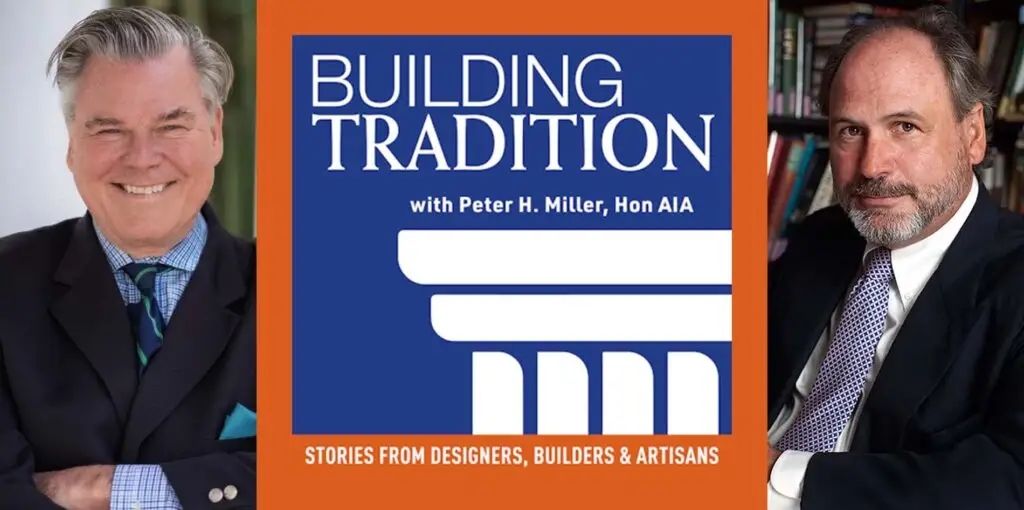
Richard Sammons joins the Building Tradition podcast to discuss the enduring principles of classical architecture, why beauty matters in our built environment, and how traditional design continues to shape timeless communities. Listen to his insights on craft, proportion, and the future of architectural heritage.
Host Peter H. Miller, Hon AIA, interviews Richard Sammons, founding partner of Fairfax & Sammons Architects, in a wide-ranging conversation on classical design, sustainability, and the future of traditional practice. Sammons shares how his classical design principles, use of natural materials, and deep study of precedent inform the creation of new period houses as well as the “creative reconstructions” of buildings from the eighteenth and early nineteenth centuries.
Fairfax & Sammons Architects is recognized as one of the most accomplished classical design firms in the country, led by the husband-and-wife team of Richard Sammons and Anne Fairfax. In the episode, Sammons discusses lessons learned from projects such as Hatton Grange, the Bennett Hotel, and multiple Palladio Award–winning residences, reflecting on the importance of historic precedent, vernacular building traditions, and the responsibility architects have to place, context, and craftsmanship.
Sammons emphasizes that the future of traditional architecture lies in sustainable practice—in reuse, repair, and a renewed understanding of traditional materials. He explains why natural materials outperform modern substitutes, how durability is rooted in smart detailing, and why even inexpensive wood can last for generations when installed correctly. He also reflects on the loss of construction mentorship after WWII, the neurological value of hand-drawing, and the role of artificial intelligence as a tool that must be filtered through a designer’s trained judgment.
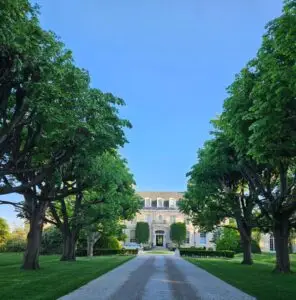
Sharon Court, Newport RI
Ultimately, Sammons argues that beauty should be a requisite of architecture, rooted not in fashion but in objective values of proportion, character, and harmony. He speaks candidly about early career advice, the need for exposure to great buildings, and the discipline of truly looking—whether through sketching, travel, or study—to cultivate the architect’s eye.