The Featured Panelists:
Anne Fairfax designs classical architecture with Richard Sammons, translating the principles rooted in Hawaii—natural ventilation, climate-responsive planning, and spatial flow—into sophisticated Manhattan and Palm Beach residences.
Alex Papachristidis composes interiors that feel both collected and immediate, layering historical European decorative arts with contemporary art and fearless color.
Jesse Carrier brings a couturier’s discipline to interiors as part of Carrier and Company—precisely tailored millwork, upholstery, and proportion in the service of quiet, enduring sophistication.
Elisa Lipsky-Karaz Editor-in-Chief of Galerie, connects contemporary art, design, and collectible culture—shaping the language and standards of modern luxury.


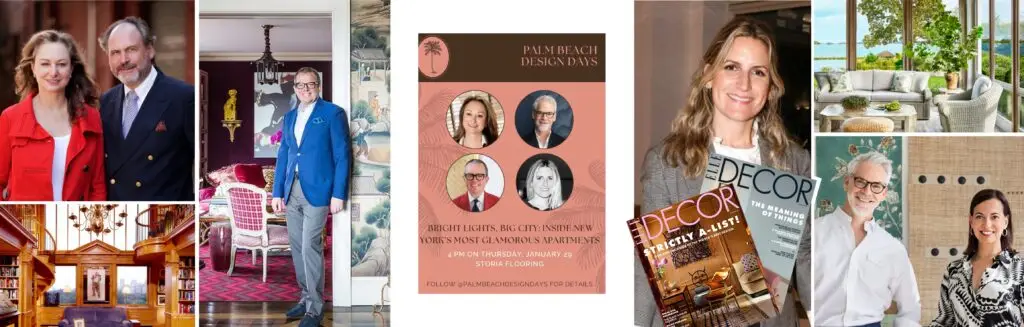
The panel surveyed a portfolio of soaring Manhattan apartments and park-view penthouses—anchored by the long-running dialogue between architect Anne Fairfax and decorator Alex Papachristidis.
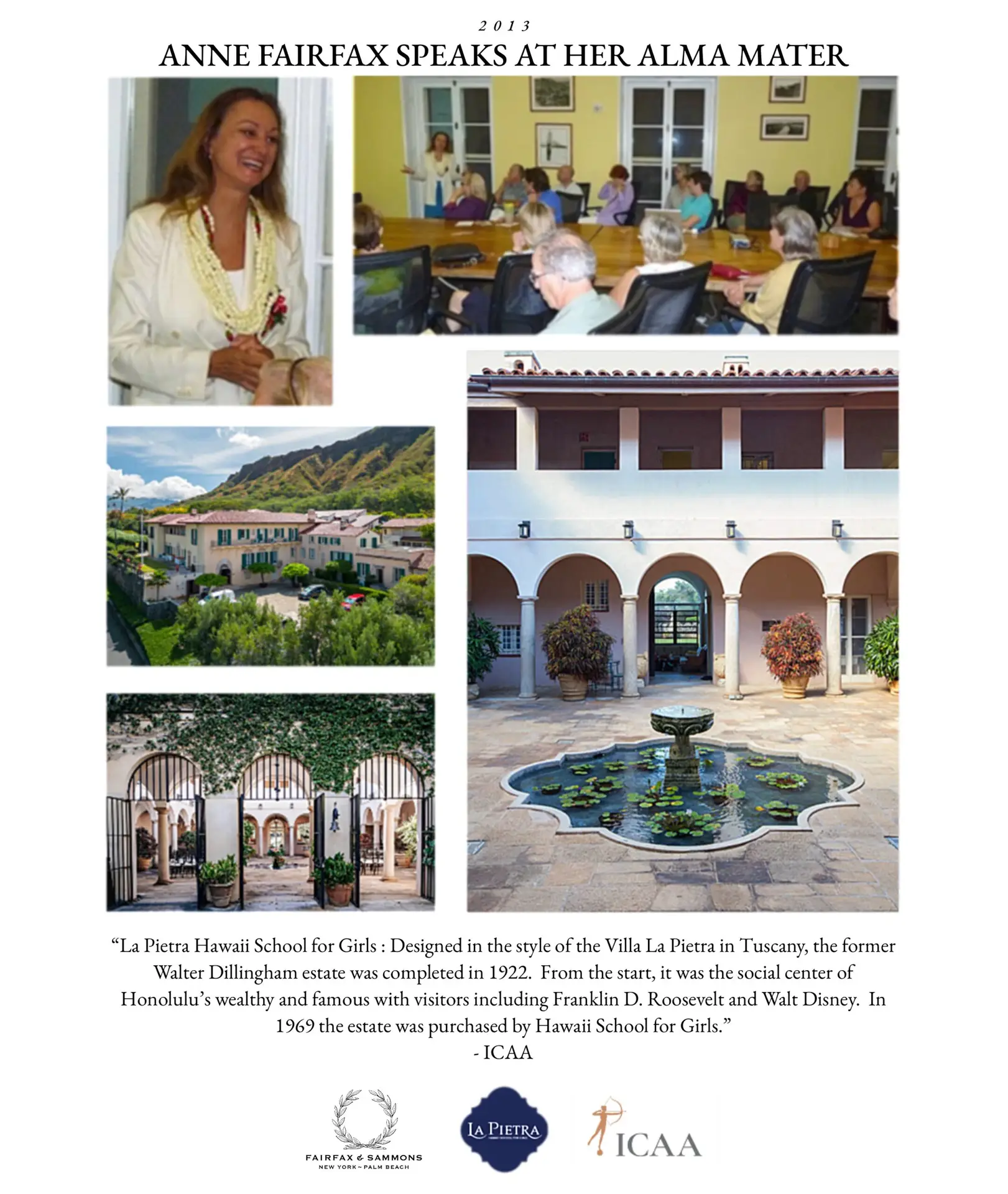
Fairfax’s love of design began in childhood in Hawaii, a place which has some of the most beautiful early 20th century architecture anywhere, all rooted in tropical climate awareness. You might say it is a vernacular logic shaped by trade winds, shade, and restraint. That early exposure produced an approach grounded in older techniques—natural ventilation, climate-responsive planning, and an admiration of those architects before her who married the classics with the humble vernacular.
In New York, those same values translate into a rare kind of urban ease: apartments that feel calm, breathable, and quietly inevitable.
Papachristidis meets this architecture with a complementary sensibility—classically literate yet boldly alive—layering European decorative arts with contemporary work and confident color. The result, particularly in their shared projects, is a mode of luxury that reads as inherited. The goal is rooms with the patina of generations, but the energy of now.
New York Collaborations
FAIRFAX & SAMMONS x ALEX PAPACHRISTIDIS
Central Park South Apartment
VIEW PROJECT DETAILS →
Upper West Side Apartment
VIEW PROJECT DETAILS →
2022 Mizner Medal
2016 Palladio Award
2013 Stanford White Award


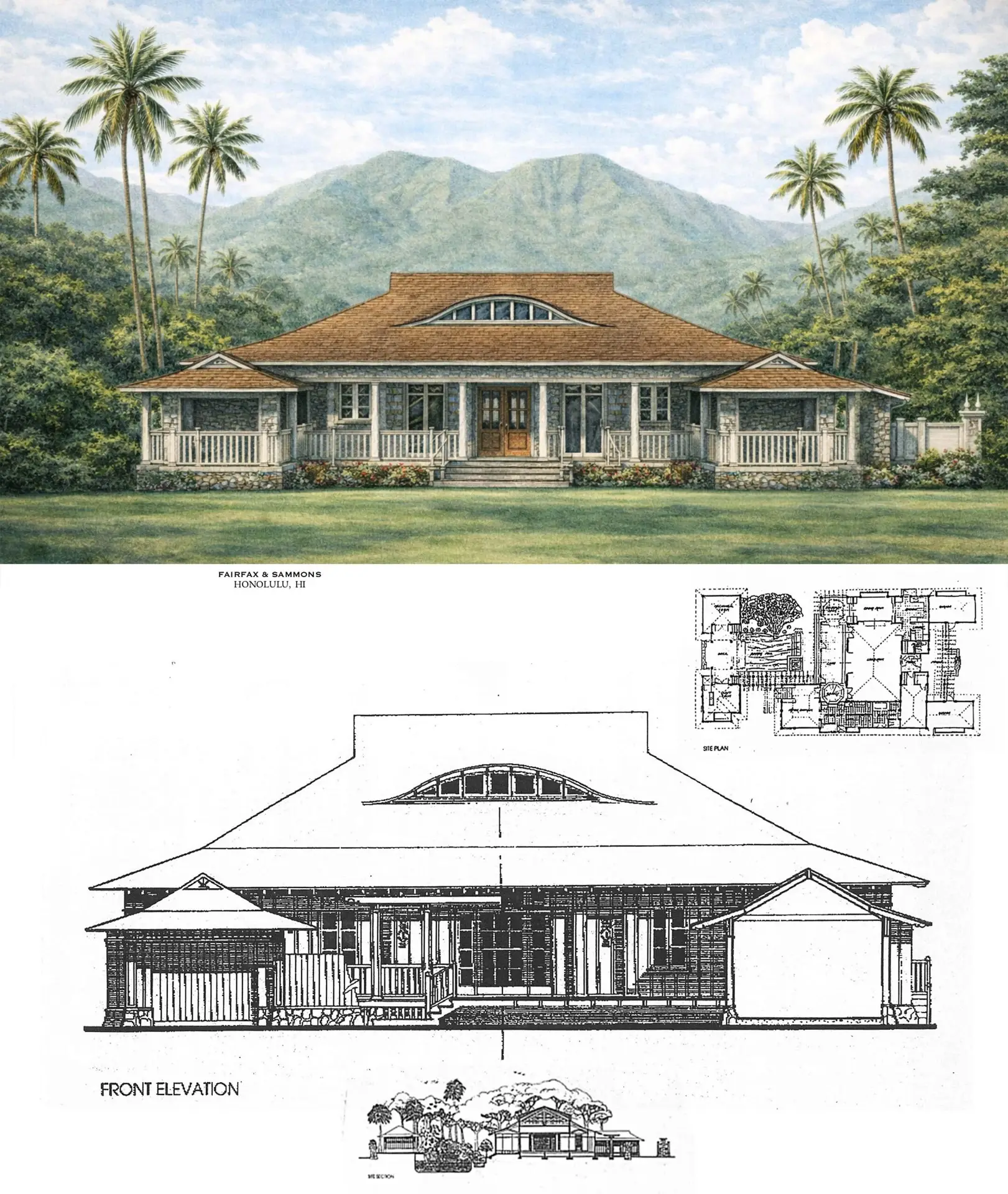
The Klein Residence and the Original Open Plan
How does Hawaii play into this? Anne Fairfax, before their Manhattan architecture projects and later Palm Beach residences, started in Honolulu. Her sketches below are for the Klein Residence, a “very open floor plan with a lovely Charles Dickey style roof.”
“I think the sustainability of this approach – and how the design works itself so comfortably into the landscape resonates with my love of landscape design and architecture, intertwined … and the Dickey roof! I like that it creates a shaded sanctuary-like environment on the interior but also sheds rain like a champ.”


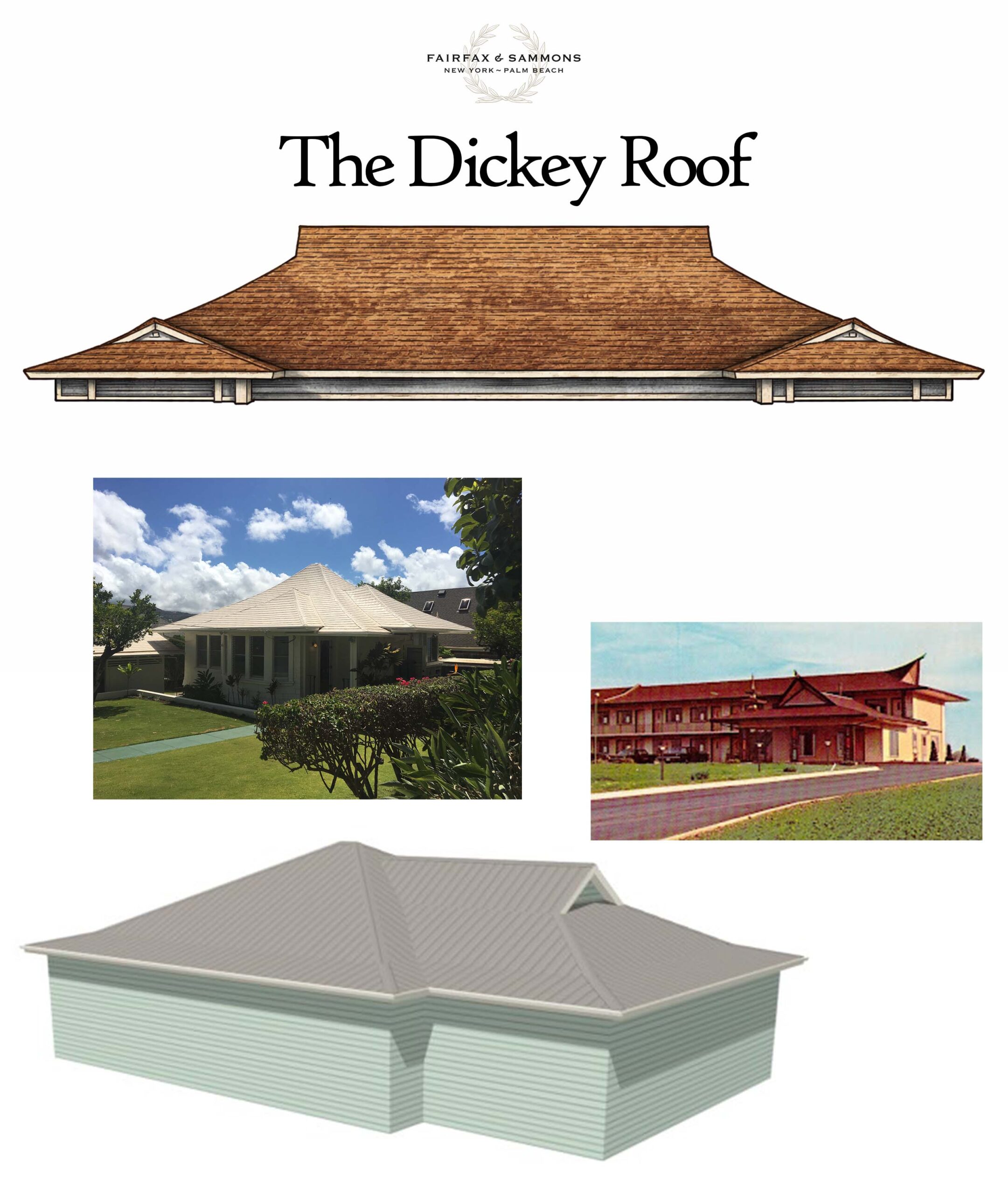
The Dickey Roof
A steep, double-sloped silhouette functioning as a ventilation engine. Heat rises and gathers at the peak; the wide, hooded eaves temper sun and deflect rain, allowing the house to remain open to the trade winds. It is not just a roofline—it is environmental intelligence expressed as form.
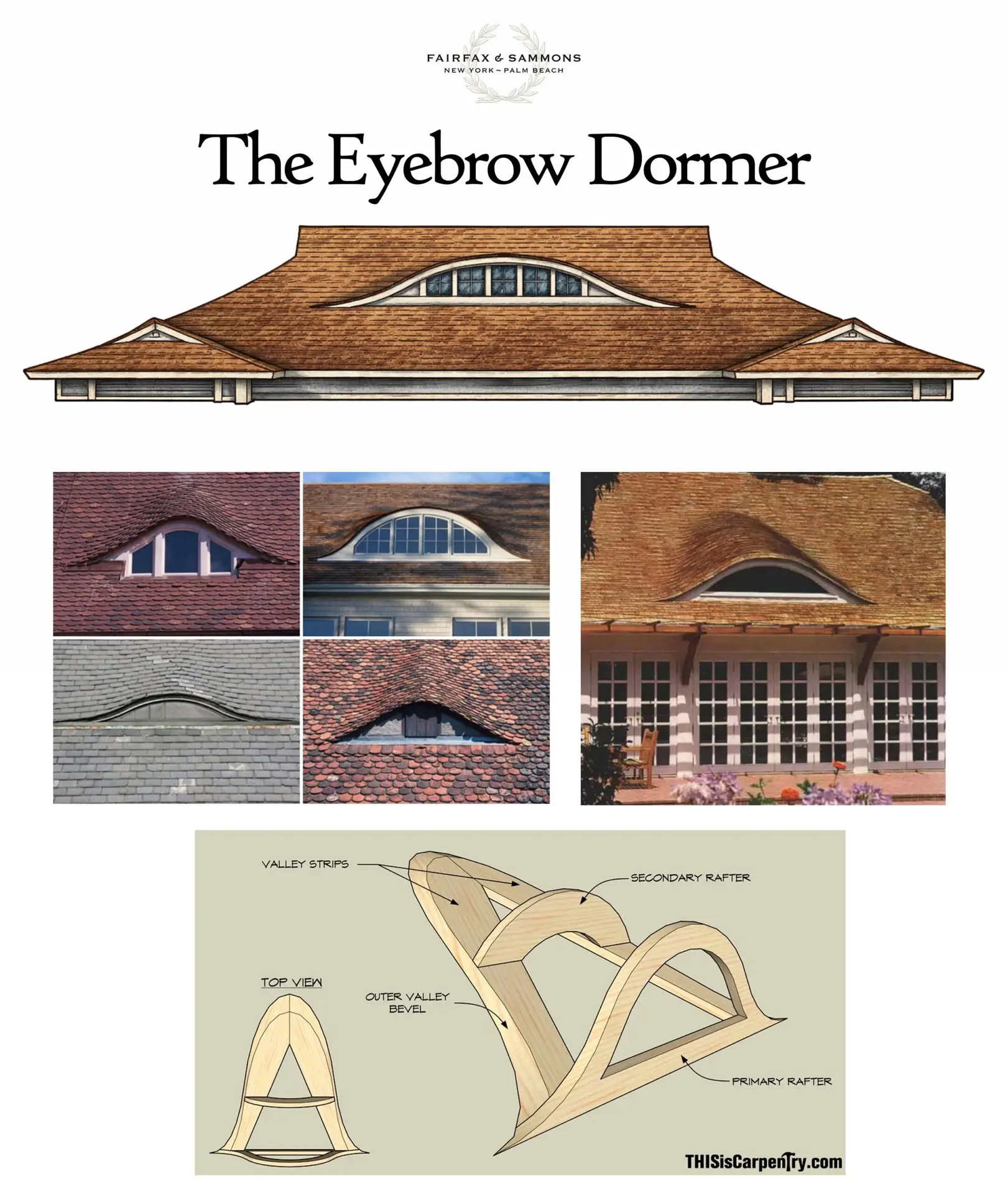
The Eyebrow Dormer
If a standard window provides view, the eyebrow dormer provides atmosphere. In the Honolulu work, these curved roof openings were used to release hot air while admitting soft, indirect light through the steep pitch of the Dickey roof—an early lesson in lighting technology before artificial became the default.
From Hawaiian Vernacular to Classical Rigor
What emerges most vividly from Richard Sammons’s drawings is the moment tropical necessity becomes classical elegance. The sketches are not nostalgic—they are instructional, showing how a building’s design and form grows from its response to the climate.
Fairfax put it plainly, describing what drew her to the Hawaiian vernacular:
“I love how the shape works itself so comfortably into the landscape, much like a monkeypod tree with a far-reaching canopy”. Sammons distilled the feeling with characteristic economy: Hawaiian vernacular is “dark and cool.”
Those two phrases—sanctuary-like and cool—explain the throughline into today’s Fairfax & Sammons interiors: rooms that can feel sheltered, temperate, and quietly restorative, even at the center of Manhattan.


Three elements that carry forward into New York
Attention to orientation
From the tropics to the Northeast, attention to the sun orientation and how one moves around the dwelling space is important for health and comfort
Axial Venting and the Enfilade
In Hawaii, aligning doors and windows moves air. In a Park Avenue salon, the same logic becomes the classical enfilade: long sightlines that lend a residence its palatial calm.
The Veranda Transition
Sammons’s drawings refine the threshold between inside and out—a skill that can turn a New York terrace from mere balcony into an inhabitable room, a genuine extension of the plan.
Richard Sammons’s Reading Shelf
A short suggested shelf —